Emotional Insourcing
The Barrel Metaphor: Why High Achievers Don't Break at the Last Crisis

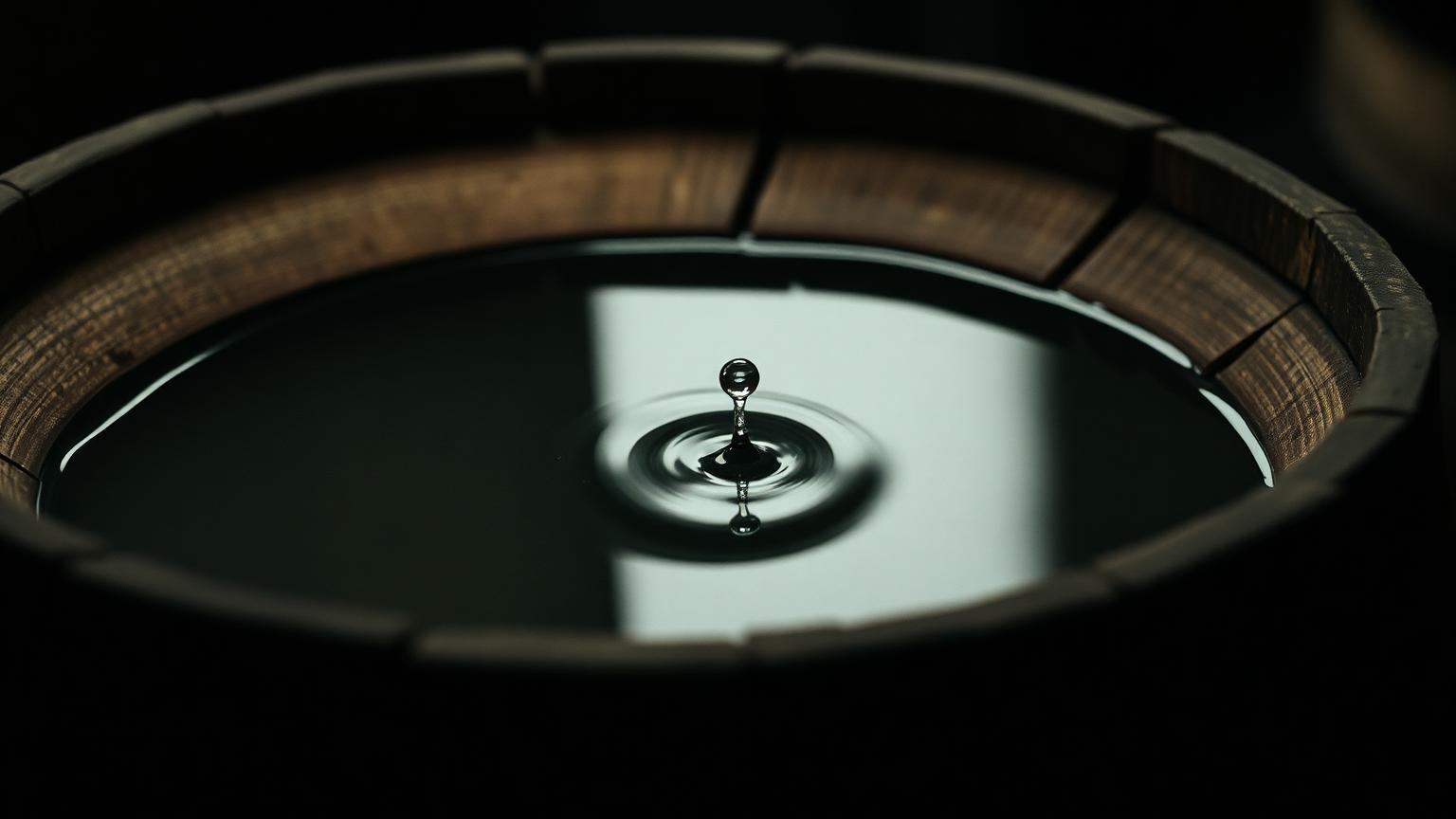
Your emotional system is like a barrel: what isn't processed accumulates — until one small drop makes it overflow. The last trigger is not the cause; the full barrel is. High achievers in particular carry it unnoticed for a long time, precisely because they're so good at it. The solution is not a bigger barrel but an open valve: daily processing instead of enduring — that's what makes emotional capacity able to grow in the first place.
There's a story that shows up at some point in almost every high performer's life. You may recognize it. It goes something like this:
"I don't understand why this knocked me down so hard. It was just one bad quarterly number. Just one employee who left. Just one argument with my partner. I've been through much worse."
And then the sentence that almost always follows: "I'm tough. I can take it."
Exactly. Supposedly.
The Truth About Emotional Capacity
Picture your emotional system as a barrel. Every barrel has a certain size. And everything you experience emotionally — stress, pressure, conflict, uncertainty, responsibility, grief, joy, excitement — flows into that barrel.
A healthy emotional system has a valve at the bottom. It processes what comes in. It drains. It makes room again.
But when the valve doesn't work — because you learned to ignore emotions, because you're "tough," because processing feels like weakness — the barrel fills. Drop by drop. Day by day. Year by year.
You don't notice. Because you function. Because the surface is calm. Because you've learned to carry the full barrel as if it were empty.
And then a drop comes. A small one. An email, a look, a sentence. And the barrel overflows.
Why the Last Drop Is Never the Problem
When someone "breaks down" — a panic attack, a burnout, an outburst of anger that surprises everyone — the natural reaction is: What happened? Which event triggered this?
But the event is not the cause. The event is the last drop. The cause is the full barrel.
And the full barrel is the result of months, years, sometimes decades of unprocessed emotional experience. Every conflict you "professionally" shrugged off. Every night your body never came to rest. Every feeling you pushed aside as "not helpful."
It's all still there. In the barrel. And it's getting heavier.
The High Achiever Trap
Most at risk are the ones who are best at carrying the barrel: high achievers. Controllers. Hyper-rationals.
Why? Because their survival strategy works. They can carry more than others. They don't collapse under normal load. They perform under pressure that would have brought others to their knees long ago.
And that is exactly the trap: because the strategy works for so long, it is never questioned. Why would it be? The numbers are good. The team delivers. Everything under control.
Until it isn't.
A high achiever's breakdown doesn't come because he is weaker than others. It comes because he is stronger — and could therefore carry the full barrel longer without noticing.
Opening the Valve
The solution doesn't start with making the barrel bigger. It starts with opening the valve.
Because here's the beautiful part: the barrel CAN grow. Emotional capacity expands. But only under one condition — the barrel first has to be empty enough to stretch. A full barrel can't grow. It's too rigid, too pressurized. It has no room for expansion.
Only when you start draining regularly does the space emerge in which growth becomes possible. Processing doesn't just make room — it makes the barrel itself bigger. Every shock you truly process (instead of merely enduring it) expands your capacity for the next one.
That's why the first step is always: open the valve.
The valve is processing. Not analysis — processing. The difference is decisive: analysis is a cognitive process — you understand why you feel the way you feel. Processing is a somatic process — your nervous system releases the charge that has built up.
Concretely, that looks like this: a deliberate breathing pause in which you don't think but feel. A moment in which you don't push away the tension in your shoulders but notice it. A practice that regularly gives your body permission to release what it has stored.
Not once a year at a retreat. Every day. Six minutes.
The Barrel and Your Speed of Return
Two ideas connect here: the barrel concept explains why you eventually overflow. The definition of resilience explains how you deal with it.
Resilience is not how much you can pour into your barrel before it overflows. Resilience is the speed at which your valve processes. The faster you let emotional charge drain, the more capacity you have — and the more room the barrel has to grow.
Speed of return is trainable. Not as a concept — as a practice. And it begins with the decision to stop keeping the valve closed. Then it's not just the speed that grows. The barrel itself grows.
In the [free workshop](/en/workshop), you feel for the first time — consciously — how full your barrel is, and you experience what happens when you open the valve. 90 minutes. No theory. A bodily experience.
Emotional Insourcing is the decision to build emotional regulation as your own core competence.
More about the movement →