Emotional Insourcing
You Don't Have a Thinking Problem. You Have a State Problem.

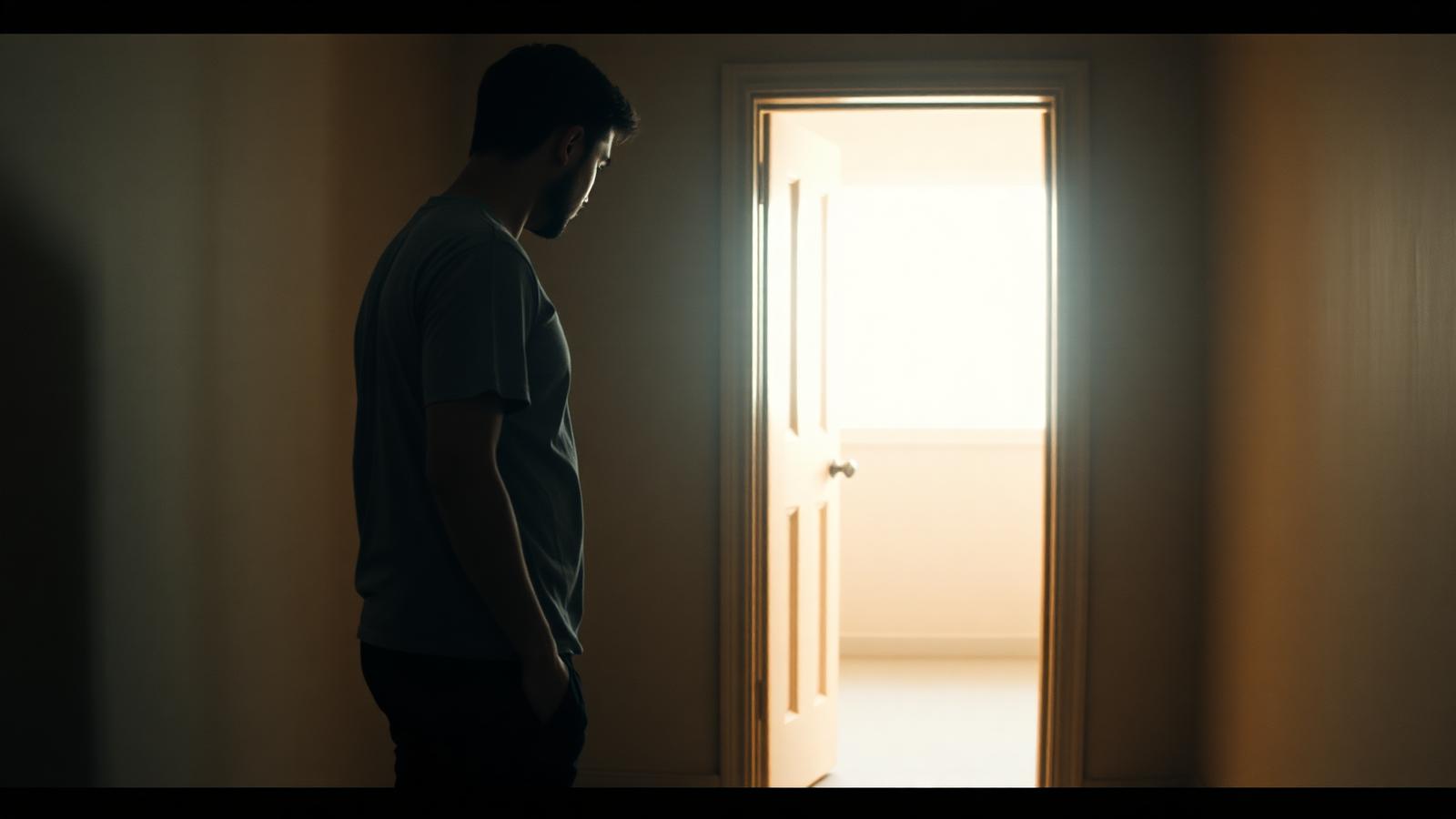
You're sitting in front of a decision you could have made long ago.
The door is there. You just don't see it.
What you see is a wall. And you're angry at the wall.
Maybe it's a conversation that's been pending for weeks — with someone close to you. Maybe it's a decision you can't afford to postpone while much bigger things in your life are on fire. You turn the case over in your head. You search for the right sentence, the right moment, the right argument. And you don't move an inch.
At this point, most of us make the wrong diagnosis.
We treat the symptom, not the state
We call it a communication problem. So we polish the script.
We call it a strategy problem. So we think it over one more round.
We call it a discipline problem. So we resolve even harder to finally do it.
We call it a time problem. So we push it to tomorrow.
And none of it moves.
Because the problem that's holding us isn't on the level where we're working on it. It's not a content problem. It's a state problem.
The content — the conversation, the decision, the conflict — is real. But it's not the reason you're stuck. You're stuck because your nervous system is currently in a state in which the solution simply isn't visible.
Why a state narrows your view
This is not a character flaw. It's biology.
When your system signals threat — and anger, fear, and overwhelm are threat signals — your focus narrows. That's useful: whoever faces a saber-toothed tiger shouldn't openly and playfully weigh twelve options. They should fight or flee. Immediately.
Except the pending conversation is not a saber-toothed tiger. And still, the same program runs.
A brain on alert doesn't look for possibilities. It looks for proof that it's already right.
It shrinks the world down to a single opponent and a single exit: away. Away from the discomfort, away from the person, away from the decision. In that state, the door hasn't disappeared. You just can't afford to see it.
How to recognize a state problem
There are a few reliable signs. Not how the content feels — how your thinking about it feels.
Your thoughts go in circles, and every lap ends at the same wall.
Every option feels bad — as if there were no good way.
You are completely certain and completely blocked at the same time.
The problem feels urgent and personal, bigger than it is.
And somewhere, you're looking for someone to blame for the wall.
A genuine content problem feels different. It's solvable. You can weigh, sort, see a first step — even if it's hard. A state problem locks exactly that: the ability to see a step at all.
Why you can't think your way out
This is where most well-meant advice fails. "Just be rational." "Think positive." "Pull yourself together." As if the state were a matter of will.
It isn't.
As long as your body is in fight-flight-freeze mode, the voice that has already passed judgment is louder than any good intention. You can't reach it through the head. You cannot think your way out of a state your body is holding. Trying is like hitting the gas with the handbrake on: lots of noise, lots of fuel, barely any movement.
That's why the order is decisive. Not think first, then calm down. Calm down first, then think.
First the state. Then the content.
What happens when the nervous system settles sounds almost too simple: the problem is often no longer the same.
Not because the content changed. But because you can see all of it again, for the first time. The dreaded conflict turns out to be the way through, not the threat. The other person's resistance turns out to be a question they don't dare to ask. The impossible decision suddenly has a third option that couldn't even exist in the narrowed state.
The door was there the whole time. Your system just couldn't afford it.
How you get into that calmer state is a craft of its own — through the body and through focus. And which question widens the narrowed view once you're regulated is the next level. But all of it begins with a single diagnostic moment: the pause in which you ask yourself whether this really is a thinking problem — or a state dressed up as one.
The actually strategic question
We teach leaders to think more sharply. To argue more clearly. To decide better. And that's not wrong.
But the most effective move in a stuck moment is rarely a better thought.
It's a calmer nervous system.
Not more analysis. More regulation.
Not a sharper mind. A calmer body.
That is the core of Emotional Insourcing: the ability to hold your own state instead of handing it over to the next reaction. Because what you can't regulate determines what you can see. And what you can't see, you can't solve.
So here is the next question, for the next time you're thinking against a wall:
Is this really the wall — or the state I'm looking at it from?
In the [free workshop](/en/workshop), you practice exactly this first step — recognizing when a problem isn't a content problem at all, and regulating your own state before you decide. Not as an idea, but as an experience in your own body.
Emotional Insourcing is the decision to build emotional regulation as your own core competence.
More about the movement →